

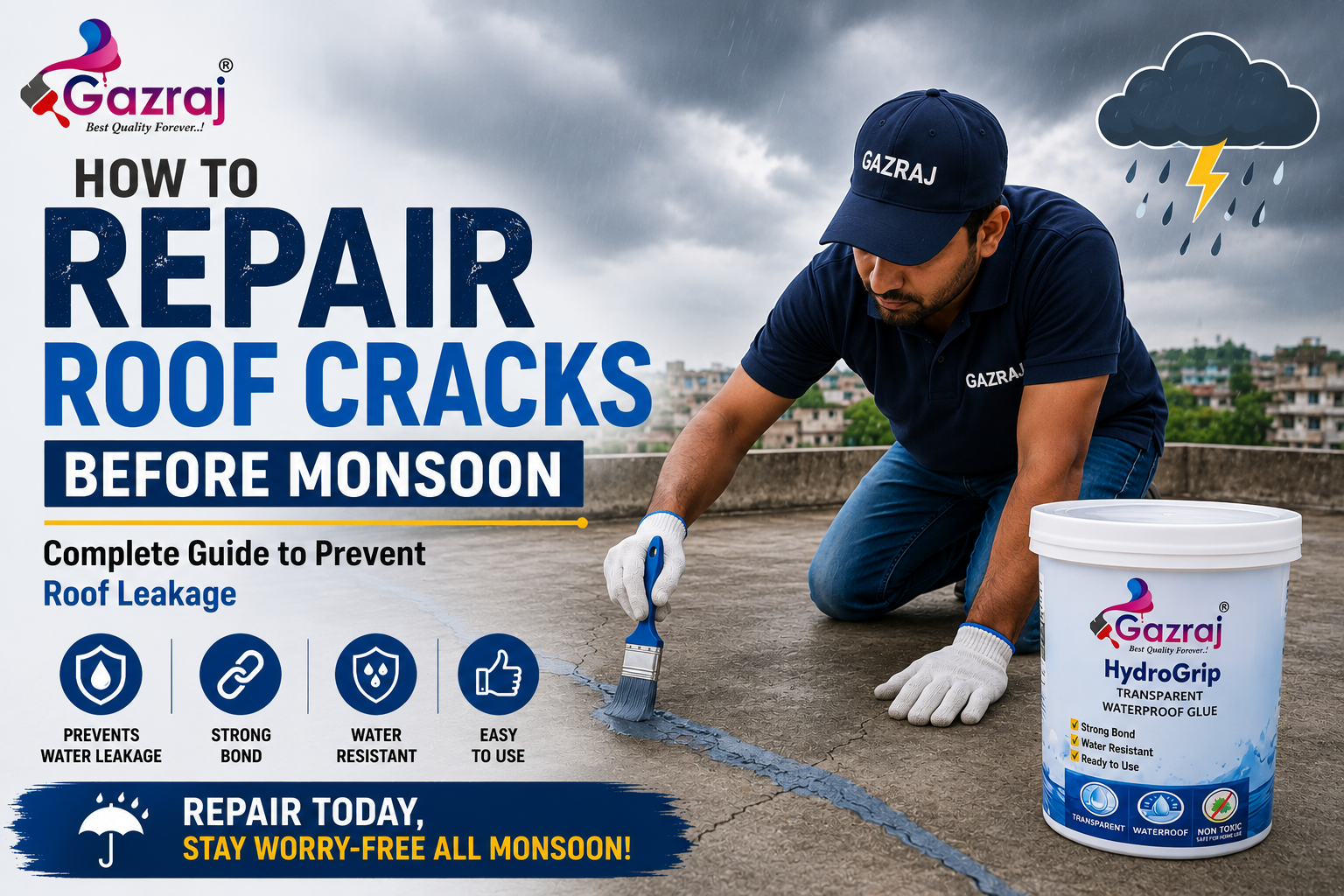
Knowing how to repair roof cracks before monsoon can help prevent water leakage, damp walls, ceiling stains and costly repairs. Even small roof cracks can allow rainwater to seep into the surface and cause damage over time.As the monsoon season approaches, roof cracks become one of the biggest concerns for homeowners, builders, and property managers. Even a small crack on the roof can allow rainwater to seep inside, leading to damp walls, ceiling stains, peeling paint, mold growth, and expensive structural repairs.
The good news is that most minor roof cracks can be repaired before the rainy season if they are identified early and treated with the right waterproof repair solution. Taking preventive action before heavy rainfall not only protects your property but also extends the lifespan of your roof.
In this comprehensive guide, you’ll learn why roof cracks develop, how to identify them, and the step-by-step process to repair roof cracks before monsoon. You’ll also discover practical maintenance tips to help prevent future water leakage.
Why Is It Important to Repair Roof Cracks Before Monsoon?
During summer, roofs are continuously exposed to intense sunlight, heat expansion, and temperature fluctuations. Over time, these conditions create tiny cracks on concrete surfaces.
When monsoon rains arrive, these cracks allow water to penetrate deep into the roof structure. Instead of remaining a surface problem, water slowly damages the concrete, weakens reinforcement, causes damp ceilings, and encourages mold growth.
Repairing roof cracks before the first rainfall offers several benefits:
- Prevents water leakage
- Protects walls and ceilings from dampness
- Reduces expensive structural repairs
- Improves roof durability
- Extends the lifespan of waterproof coatings
- Prevents mold and fungal growth
- Saves maintenance costs
Preventive maintenance is always more affordable than repairing extensive water damage after the rainy season begins.
Common Causes of Roof Cracks
Understanding why cracks appear helps you choose the right repair method.
1. Extreme Temperature Changes
Continuous heating during the day and cooling at night causes concrete to expand and contract repeatedly. This movement eventually creates surface cracks.
2. Aging Roof
Older roofs naturally lose strength over time. Continuous exposure to weather reduces flexibility and increases the chances of cracking.
3. Poor Waterproofing
If the roof was not waterproofed correctly during construction, moisture gradually weakens the surface.
4. Water Stagnation
Standing water after rainfall slowly penetrates concrete and damages the roof surface.
5. Low-Quality Construction Materials
Poor-quality cement, improper curing, or weak construction practices often result in early cracking.
6. Structural Movement
Small movements caused by settling foundations or building expansion can also create visible cracks.
Signs That Your Roof Needs Immediate Repair
Many people wait until water starts dripping from the ceiling. However, roofs usually show warning signs much earlier.
Look for these indicators:
- Visible roof cracks
- Hairline cracks across the terrace
- Damp patches on ceilings
- Peeling wall paint
- Water stains indoors
- Mold or fungus growth
- Small water seepage after rain
- Loose roof coating
- Surface erosion
Repairing these issues early prevents major damage later.Cracks in the roof should be inspected early because even small surface cracks can allow water to enter during heavy rainfall.
Types of Roof Cracks
Different cracks require different repair methods.
Hairline Cracks
Very thin surface cracks caused by temperature changes.
Usually easy to repair if treated early.
Shrinkage Cracks
Develop as concrete dries and shrinks after construction.
Structural Cracks
These are wider and deeper cracks that may indicate movement within the building structure.
Professional inspection is recommended.
Waterproofing Failure Cracks
Cracks appearing because the existing waterproof layer has deteriorated.
Tools and Materials Required
Before starting roof repair, keep these materials ready:
- Wire brush
- Putty knife
- Cleaning cloth
- Safety gloves
- Protective eyewear
- Paint brush or roller
- Waterproof repair adhesive
- Crack filling material (if required)
- Bucket of clean water
Using quality waterproof repair products significantly improves repair durability.
Roof Crack Repair: What You Need to Know
Roof crack repair involves identifying the type of crack, preparing the damaged surface, removing loose material, and applying a suitable repair solution. Minor surface cracks may be repaired with appropriate waterproof repair products when used according to the manufacturer’s instructions. Wider, deep, or structural cracks should be assessed by a qualified professional before repair.
Step-by-Step Guide to Repair Roof Cracks Before Monsoon
Following these roof cracks repair steps can help address minor surface damage before the monsoon, provided the roof condition and repair product are suitable.
Step 1: Inspect the Entire Roof
Walk across the roof carefully.
Look for:
- Visible cracks
- Loose concrete
- Damaged waterproof coating
- Damp areas
- Ponding water
- Expansion joints
Mark every damaged location before starting repairs.
Step 2: Clean the Surface
Proper cleaning is one of the most important steps.
Remove:
- Dust
- Dirt
- Loose concrete
- Moss
- Old paint
- Grease
A clean surface allows the waterproof repair material to bond more effectively.
Step 3: Open Small Cracks Slightly
Hairline cracks often need slight widening using a suitable hand tool.
This helps the waterproof repair solution penetrate deeper and create a stronger bond.
Avoid making cracks unnecessarily large.
Step 4: Remove Loose Material
Brush away all loose particles using a wire brush.
Vacuum or wipe away remaining dust before proceeding.
The cleaner the surface, the stronger the repair.
Step 5: Apply Waterproof Repair Solution
Apply a high-quality waterproof repair adhesive evenly over the cleaned crack using a brush or applicator.
Ensure the material fully penetrates the crack and covers the surrounding surface.
For minor roof cracks, a premium waterproof glue such as Gazraj HydroGrip Waterproof Glue can help create a durable, water-resistant seal when applied according to the product instructions.
Do not leave gaps or uncovered sections.
Step 6: Allow Proper Drying
Drying time depends on:
- Temperature
- Humidity
- Product specifications
Avoid walking on the repaired area until it has completely cured.
Step 7: Inspect the Repair
After curing:
- Check for missed spots
- Ensure complete coverage
- Verify that no visible gaps remain
Apply a second coat if recommended by the manufacturer.
Tips to Prevent Roof Cracks in Future
Preventive maintenance is easier than emergency repairs.
Follow these simple practices:
- Inspect your roof twice a year.
- Clean drainage outlets regularly.
- Remove standing water.
- Repair small cracks immediately.
- Avoid placing excessive loads on the roof.
- Maintain waterproof coatings.
- Schedule maintenance before every monsoon.
Regular inspections significantly reduce repair costs.
Common Mistakes to Avoid
Many roof repairs fail because of poor preparation.
Avoid these mistakes:
- Repairing a dirty surface
- Ignoring hairline cracks
- Applying waterproof products during rainfall
- Using low-quality repair materials
- Walking on uncured repairs
- Skipping routine inspections
Proper preparation is just as important as the repair itself.
Benefits of Repairing Roof Cracks Before Monsoon
Repairing roof cracks early offers several long-term advantages:
- Prevents water seepage
- Protects concrete structure
- Increases roof lifespan
- Reduces maintenance costs
- Improves property value
- Prevents mold formation
- Keeps interiors dry
- Improves waterproofing performance
Why Choose a Quality Waterproof Repair Solution?
The effectiveness of any roof repair depends on the quality of the repair material.
A reliable waterproof repair solution should provide:
- Strong adhesion
- Water resistance
- Weather durability
- Flexible sealing
- Long-lasting performance
- Easy application
Selecting the right product helps improve repair longevity and minimizes future maintenance.
Frequently Asked Questions
Can small roof cracks cause leakage?
Yes. Even hairline cracks can allow rainwater to seep into the roof over time.
When should roof cracks be repaired?
The ideal time is before the monsoon season begins.
Can waterproof glue repair roof cracks?
For minor surface cracks, a quality waterproof repair adhesive can help seal the crack effectively when used correctly. Larger or structural cracks may require additional repair methods.
How often should roofs be inspected?
At least twice a year and always before the rainy season.
What causes roof cracks?
Temperature changes, aging, poor waterproofing, water stagnation, structural movement, and low-quality construction materials.
How do you repair roof cracks before monsoon?
To repair minor roof cracks before monsoon, inspect the roof, clean the damaged area, remove loose material, prepare the crack as required, and apply a suitable waterproof repair product according to the manufacturer’s instructions. Larger or structural cracks should be assessed by a qualified professional.
Conclusion
Knowing how to repair roof cracks correctly can help prevent water leakage and reduce costly roof damage. Repairing roof cracks before monsoon is one of the smartest investments you can make to protect your home or commercial building. Small cracks that seem harmless today can quickly turn into major water leakage problems once heavy rainfall begins.
By inspecting your roof regularly, cleaning damaged areas properly, repairing cracks early, and using a dependable waterproof repair solution, you can significantly reduce the risk of seepage and extend the life of your roof.
Whether you are a homeowner, contractor, builder, or property manager, preventive roof maintenance before the monsoon season helps save money, avoid structural damage, and keep your property safe from water-related issues.