

Roofs and terraces are continuously exposed to rain, sunlight, moisture, temperature changes, and harsh weather conditions. Over time, this exposure can allow water to penetrate vulnerable areas, resulting in damp ceilings, peeling paint, surface deterioration, and other moisture-related problems.
A water-based waterproof roof coating provides a practical way to create a protective layer over the roof surface and reduce water penetration. Unlike many traditional waterproofing methods, water-based coatings are generally easier to apply, have lower odor, and can provide effective coverage across concrete roofs and terraces when the surface is prepared correctly.
For homeowners, contractors, builders, and property managers looking for an effective roof waterproofing coating, understanding how these products work and how to apply them correctly is essential.
In this guide, we will explain water-based waterproof roof coatings, their benefits, applications, surface preparation, application process, and important factors to consider when selecting a coating.A suitable waterproof roof coating can be used on compatible concrete roofs and terraces to help reduce water penetration when the surface is properly prepared and maintained.
What Is a Water-Based Waterproof Roof Coating?
A water-based waterproof roof coating is a liquid coating formulated to create a protective barrier over a roof or terrace surface.
After application and drying, the coating forms a continuous protective film that helps reduce the penetration of rainwater and moisture into the underlying surface.
Water-based waterproofing systems are commonly considered for:
- Concrete roofs
- Residential terraces
- Flat roofs
- Balconies
- Parapet walls
- Exterior concrete surfaces
- Areas exposed to regular rain and moisture
Because water acts as the primary carrier in these coatings, they can offer convenient application and cleanup compared with many solvent-based systems.
Waterproof Roof Coating for Indian Roofs & Terraces
Waterproof roof coating is an effective solution for protecting concrete roofs and terraces in India from rain, moisture and water seepage. Indian roofs are regularly exposed to strong sunlight, temperature changes and heavy monsoon rainfall, which can gradually affect unprotected concrete surfaces.
A suitable roof waterproofing coating creates a protective layer over the prepared surface and helps reduce water penetration. It can be used on residential terraces, concrete roofs and other compatible exterior surfaces. Proper crack repair, surface preparation and drainage should be completed before applying the waterproof coating for reliable results.
Why Is Roof Waterproofing Important?
A roof is one of the most exposed parts of any building. Throughout the year, it experiences direct sunlight, rainfall, standing water, dust, and changing temperatures.
If the roof surface is inadequately protected, water may gradually enter porous concrete, joints, or damaged areas.
Common signs of roof waterproofing problems include:
- Damp patches on ceilings
- Water stains
- Peeling interior paint
- Moisture around roof joints
- Surface deterioration
- Algae or fungal growth in damp areas
- Water seepage after heavy rainfall
Applying an appropriate waterproof coating for a roof can help protect the surface before moisture problems become more difficult and expensive to address.
Waterproof Roof Coating for Concrete Roofs
Waterproof roof coating for concrete roofs can provide an additional protective layer over properly prepared concrete surfaces. It can help reduce water penetration caused by rain and moisture when used according to the product manufacturer’s instructions.
Before applying a waterproof coating for a concrete roof, repair significant cracks and damaged areas, clean the surface thoroughly, and make sure water drains properly.
The suitability of the coating depends on the concrete condition, surface preparation, weather exposure, and the specific product specifications.
Benefits of Water-Based Waterproof Roof Coating
1. Helps Prevent Water Seepage
The primary purpose of a waterproof roof coating is to form a protective barrier that helps reduce water penetration.
When correctly applied over a properly prepared surface, the coating covers the roof and helps protect it against rain and moisture.
2. Suitable for Large Roof Areas
Liquid coatings can be spread across broad roof and terrace surfaces, allowing continuous coverage without the large number of joints associated with some sheet-based waterproofing systems.
This makes them useful for residential terraces and other concrete roof areas.
3. Easy Application
Depending on the manufacturer’s instructions, many water-based waterproof coatings can be applied using a:
- Roller
- Brush
- Suitable coating applicator
This can simplify application, particularly on accessible terrace surfaces.
4. Lower Odor
Water-based formulations generally have less solvent odor than conventional solvent-based coatings, making them convenient for many residential and commercial applications.
5. Protection Against Weather Exposure
A roof coating does more than deal with rainfall. A suitable exterior coating can also provide an additional protective layer against everyday environmental exposure.
For roofs exposed to strong sunlight, selecting a product designed with UV-resistant properties can provide additional protection to the coating system.
6. Helps Improve Roof Durability
Continuous exposure to moisture can contribute to deterioration of roof surfaces.
By limiting direct water penetration, an appropriate waterproofing system can help maintain the roof surface and reduce moisture-related damage.
7. Useful for Preventive Maintenance
Waterproofing does not always need to begin after a major leakage problem develops.
Periodic roof inspection and timely waterproofing can form part of preventive building maintenance, particularly before periods of heavy rainfall.
Where Can Water-Based Waterproof Coatings Be Used?
The suitability of any product depends on its formulation and the manufacturer’s recommendations. However, roof waterproofing coatings are commonly considered for several exterior areas.
Concrete Roofs
Concrete is strong but can contain pores, joints, and small imperfections through which moisture may enter.
A waterproof coating for concrete roofs creates an additional protective surface over the concrete.
Terraces
Open terraces receive direct rain and sunlight throughout the year.
Applying a terrace waterproof coating can help reduce water penetration and protect the underlying surface.
Flat Roofs
Flat roofs require particular attention because inadequate drainage may allow water to remain on the surface.
Waterproof coatings can form part of a broader waterproofing and drainage strategy.
Parapet Walls
Water can sometimes enter through exposed parapet walls rather than through the main roof area.
Protecting suitable exposed surfaces may help reduce moisture penetration.
Balconies
Certain waterproof coating systems may also be suitable for concrete balcony surfaces, subject to the product’s intended application.
How Does Water-Based Roof Waterproofing Work?
Water-based waterproofing products are applied as liquid coatings.
During drying and curing, the liquid coating forms a protective film over the prepared substrate. Rather than treating only one isolated point, the coating can cover a broader surface area.
The effectiveness of the waterproofing system depends on several factors, including:
- Surface condition
- Surface preparation
- Correct application thickness
- Number of coats
- Drying and curing conditions
- Existing cracks or structural damage
- Drainage condition
This is why simply applying a waterproof coating over an unprepared roof may not produce the desired result.
For this reason, a waterproof roof coating should be selected according to the roof surface, intended application, weather exposure, and manufacturer’s technical specifications.
How to Apply Water-Based Waterproof Roof Coating
Correct application is one of the most important factors affecting waterproofing performance.
Always follow the specific product manufacturer’s instructions. A typical process may include the following steps.
Step 1: Inspect the Roof
Before applying the coating, carefully inspect the entire roof.
Look for:
- Cracks
- Loose concrete
- Damaged joints
- Existing coating failure
- Water accumulation
- Dust and debris
- Areas showing previous leakage
Serious structural cracks or active leakage sources should be assessed and repaired appropriately before coating.
Step 2: Clean the Surface
The roof should be clean and suitable for coating.
Remove loose:
- Dust
- Dirt
- Debris
- Flaking material
- Weak previous coatings
- Other contaminants that could affect adhesion
Good surface preparation helps the waterproof coating bond properly.
Step 3: Repair Existing Damage
A waterproof coating should not be treated as a substitute for necessary structural repairs.
Visible cracks, damaged joints, holes, and weak concrete should be repaired using an appropriate repair method before waterproofing begins.
Step 4: Check Drainage
Make sure roof drains and outlets are functioning properly.
Waterproofing and drainage work together. Even a well-coated roof should be designed to move rainwater away efficiently rather than allowing unnecessary standing water.
Step 5: Apply the Waterproof Coating
Apply the product according to the manufacturer’s recommended coverage and application method.
Depending on the specific coating, a brush or roller may be used.
Maintain even coverage across the roof surface.
Step 6: Allow Proper Drying
Do not rush the drying process.
Each coat should receive the recommended drying time before another coat is applied or the surface is exposed to rain.
Temperature, humidity, and weather conditions can affect drying.
Step 7: Apply Additional Coat if Required
Some waterproofing systems require multiple coats to achieve the recommended film thickness and coverage.
Follow the manufacturer’s technical instructions regarding coat direction, drying interval, and coverage.
Step 8: Inspect the Finished Surface
After curing, inspect the coated area for:
- Missed spots
- Uneven coverage
- Pinholes
- Visible damage
- Areas requiring correction
Proper inspection helps ensure that the entire intended surface has been treated.
Common Mistakes to Avoid During Roof Waterproofing
Even a good waterproofing product may perform poorly if applied incorrectly.
Avoid these common mistakes:
Applying Over a Dirty Surface
Dust and loose material can reduce coating adhesion.
Ignoring Existing Cracks
Simply coating over significant cracks may not solve the underlying problem. Repair them appropriately before applying the waterproofing system.
Applying Before Rain
Unexpected rainfall during application or curing may affect coating performance.
Check weather conditions and follow the required curing period.
Using Insufficient Coating
Applying significantly less material than recommended may prevent the coating from achieving the required protective film.
Ignoring Drainage Problems
Water accumulation should be addressed as part of the overall waterproofing strategy.
Not Following Product Instructions
Application methods can differ between products. Always follow the manufacturer’s technical recommendations instead of assuming every waterproof coating works in the same way.
Water-Based Waterproof Coating vs Traditional Waterproofing
Traditional roof waterproofing may involve membranes, cementitious systems, bituminous materials, tiles, or other treatments.
Liquid water-based coatings offer a different approach.
They can be useful where property owners want:
- Liquid application
- Broad surface coverage
- Easier application
- Lower odor
- A protective roof coating system
- Convenient maintenance
However, there is no single waterproofing method suitable for every roof.
The right solution depends on the roof condition, substrate, drainage, existing damage, climate, and intended use of the area.
How to Choose the Right Waterproof Roof Coating
Before selecting a product, consider more than just price.
Waterproofing Performance
The product should be specifically intended for exterior waterproofing applications.
Surface Compatibility
Confirm that the coating is suitable for the roof material on which you intend to use it.
Weather Resistance
For exposed roofs, look for a coating designed to withstand outdoor environmental conditions.
UV Resistance
Roofs receive prolonged sunlight exposure. A coating intended for exterior roof applications should be suitable for these conditions.
Adhesion
Good adhesion to a properly prepared substrate is important for reliable coating performance.
Application Requirements
Check the recommended:
- Surface preparation
- Number of coats
- Coverage
- Drying time
- Application tools
- Curing conditions
These factors will help determine the overall practicality of the system.
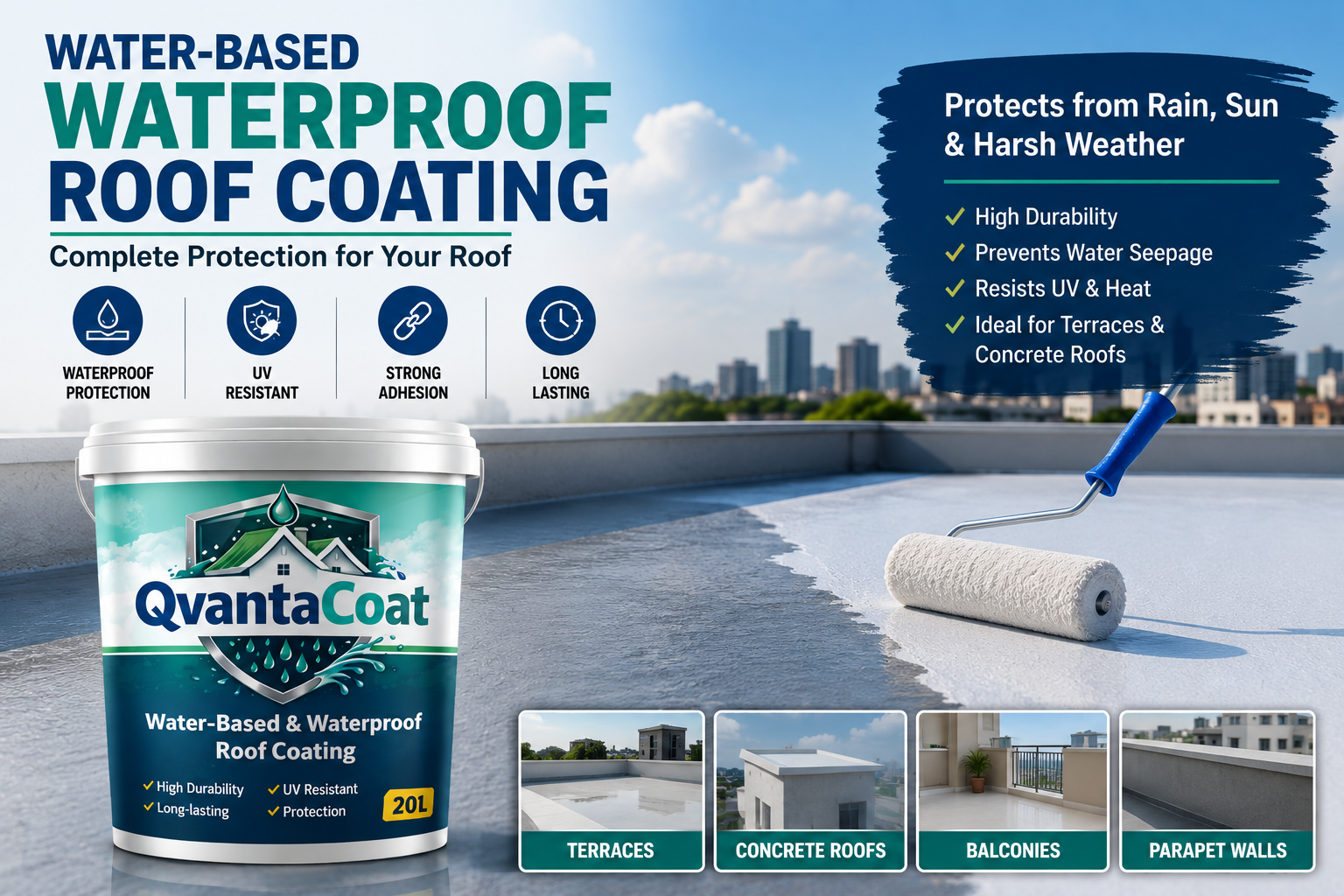
Qvanta Coat – Water-Based & Waterproof Roof Coating
For users looking for a water-based waterproof roof coating, Gazraj Qvanta Coat is designed for roof waterproofing and protective coating applications.
Qvanta Coat is positioned as a water-based waterproof roof coating with features including:
- Water-based formulation
- Waterproof protection
- High durability
- UV resistance
- Long-lasting protection
- Suitable for roof coating applications
When using Qvanta Coat, proper surface inspection, preparation, application, and curing remain important for achieving the intended performance.
Rather than waiting for severe water damage to appear, applying a suitable waterproofing system as part of preventive roof maintenance can help protect exposed surfaces.
Roof Waterproofing Maintenance Tips
Waterproofing should be accompanied by regular roof maintenance.
Inspect the roof periodically, particularly before and after heavy rainfall.
Keep drainage outlets clean and remove accumulated debris.
Check for new cracks, damaged areas, or deterioration in the existing coating.
Avoid allowing water to remain unnecessarily on the terrace.
If any part of the waterproof coating becomes damaged, address the affected area before the problem spreads.
Regular inspection can help identify minor problems before they develop into larger leakage issues.
Final Thoughts
A water-based waterproof roof coating can provide an effective protective layer for suitable roofs and terraces exposed to rain, moisture, sunlight, and changing weather conditions.
However, successful waterproofing depends on more than the coating itself. Correct surface preparation, repair of existing damage, proper drainage, appropriate application thickness, and sufficient curing all contribute to performance.
For property owners considering a waterproof roof coating, products such as Qvanta Coat Water-Based & Waterproof Roof Coating can be evaluated according to the condition of the roof and the specific application requirements.
Taking preventive action and maintaining the roof regularly can help reduce water seepage problems and protect the building over the long term.
Frequently Asked Questions
What is the best waterproof roof coating for a concrete roof?
The suitable waterproof roof coating depends on the roof condition, surface preparation, drainage, weather exposure, and product specifications. For compatible concrete roofs and terraces, a water-based waterproof coating such as Gazraj Qvanta Coat can be considered according to the manufacturer’s application instructions.
Can waterproof coating be applied to a concrete roof?
Many waterproof roof coatings are designed for concrete surfaces. The exact suitability depends on the product, surface condition, and manufacturer’s recommendations.
Can waterproof coating stop roof leakage?
A waterproof coating can help prevent water penetration through suitable roof surfaces. However, major structural cracks, damaged joints, drainage problems, or other leakage sources may require repair before coating.
How many coats of waterproofing are required?
The required number of coats varies according to the product and application specifications. Always follow the manufacturer’s recommended coverage and application instructions.
Is water-based waterproofing suitable for terraces?
Water-based waterproof coatings can be suitable for many terrace applications when the substrate is compatible and properly prepared.
Should cracks be repaired before waterproof coating?
Yes. Significant cracks and damaged areas should be properly assessed and repaired before applying a roof waterproofing coating.
What is the best roof waterproofing solution in India?
A suitable waterproof roof coating can help protect concrete roofs and terraces in India from rain, moisture and water seepage. The right solution depends on the roof condition, existing cracks, drainage and surface preparation. Water-based waterproof coatings such as Gazraj Qvanta Coat can be considered for suitable roof and terrace applications.
When is the best time to waterproof a roof?
Waterproofing should ideally be carried out during suitable dry weather so the surface can be prepared properly and the coating receives sufficient drying and curing time before exposure to rainfall.