

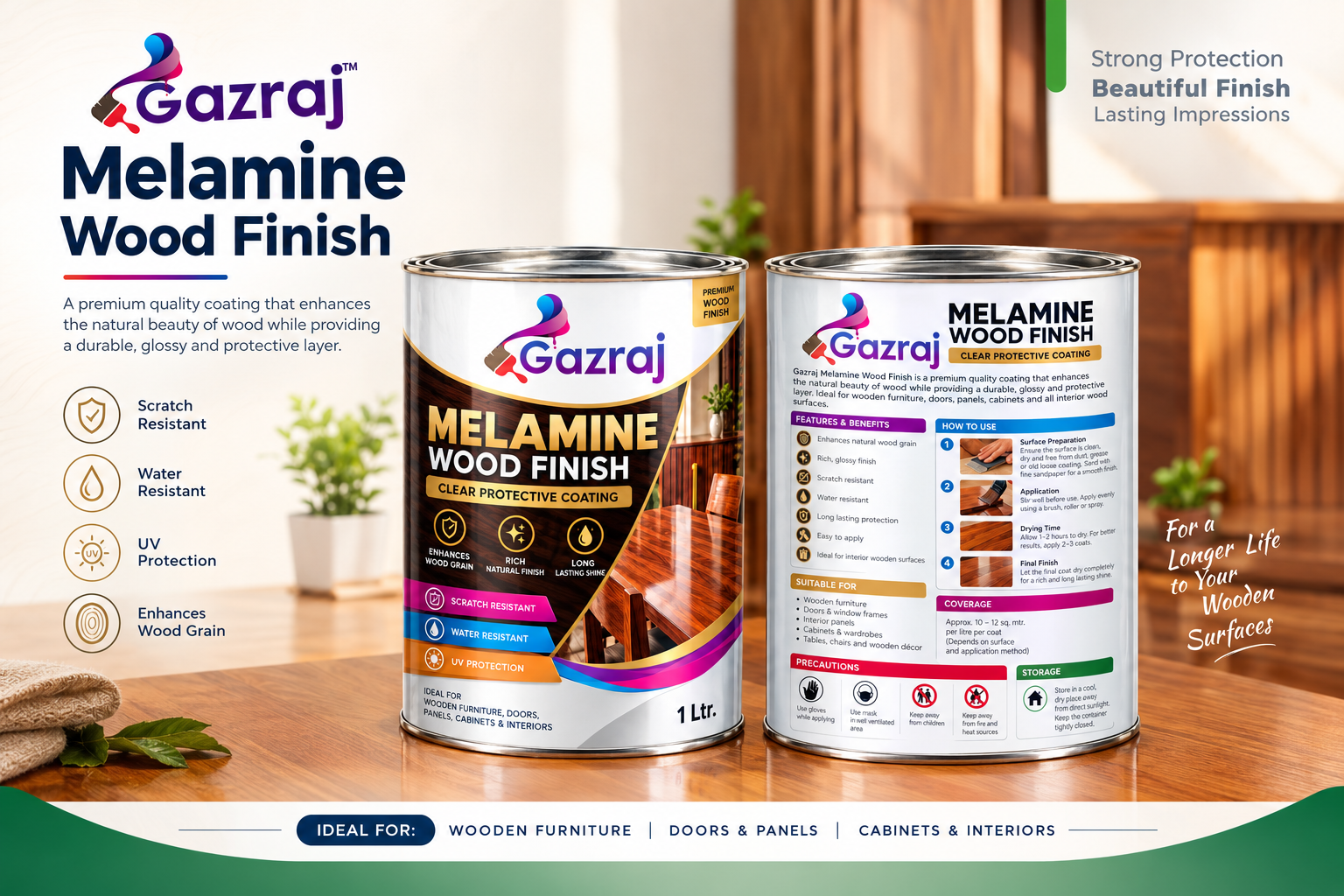
Wooden furniture adds beauty, warmth and elegance to homes, offices and commercial interiors. However, the appearance and performance of wooden furniture depend not only on the quality of the wood but also on the finishing products used on its surface.
One popular choice for interior wood finishing is melamine polish for wood. It helps enhance the natural appearance of wooden surfaces while providing a protective finish when the correct product and application system are used.
Whether you are a furniture manufacturer, carpenter, interior contractor or woodworking professional, understanding the right melamine finishing process can help you achieve better results.
In this article, we will explore the uses, benefits, application process and finishing techniques of melamine polish for wooden furniture.
What Is Melamine Polish for Wood?
Melamine polish is a wood finishing coating commonly used on interior wooden furniture, cabinets, doors, tables and decorative wooden surfaces.
It is available in different finish options, including glossy and matt, allowing furniture manufacturers to achieve different appearances according to their design requirements.
A typical melamine finishing system may include a melamine sealer followed by a melamine topcoat. The sealer helps prepare the wooden surface, while the topcoat provides the final decorative and protective finish.
The exact formulation and application requirements can vary between manufacturers, so it is important to follow the product’s technical instructions.
Why Is Melamine Polish Used on Wooden Furniture?
Furniture manufacturers look for a finishing solution that improves the appearance of wood and supports everyday furniture use.
Melamine polish is commonly selected for interior furniture because it offers several useful finishing characteristics.
1. Enhances the Natural Beauty of Wood
Melamine clear coatings help highlight the natural grain and appearance of wood. This makes them suitable for furniture where the original wooden texture is an important part of the design.
2. Provides a Smooth Surface Finish
When the wooden surface is properly prepared and the coating is applied correctly, melamine polish can produce a smooth and uniform finish.
3. Offers Glossy and Matt Options
Different furniture designs require different surface appearances. Melamine glossy and matt finishes allow manufacturers to select a finish according to their requirements.
4. Supports Everyday Furniture Maintenance
A properly selected and applied melamine coating can help protect interior wooden surfaces against common household stains and everyday handling.
5. Suitable for Different Furniture Applications
Melamine finishes are commonly used on interior furniture, cabinets, wardrobes, tables, wooden panels and other decorative wooden surfaces.
How to Apply Melamine Polish on Wood
Proper surface preparation and application are important for achieving a professional furniture finish.
Here is a general overview of the melamine wood finishing process.
Step 1: Prepare the Wooden Surface
Begin by checking that the wooden surface is clean, dry and free from dust, grease, oil and other contaminants.
Use suitable sandpaper to smooth the surface along the direction of the wood grain. Remove all sanding dust before applying the coating.
Step 2: Apply Melamine Sealer
Apply a suitable melamine sealer according to the manufacturer’s instructions.
Melamine sealer helps prepare the wooden surface for the finishing coat and supports a more uniform coating system.
Allow the sealer to dry for the recommended period.
Step 3: Sand the Surface
After the sealer has dried sufficiently, sand the surface using the recommended sandpaper grade.
Remove loose sanding particles and dust before proceeding to the next stage.
Step 4: Apply Melamine Glossy or Matt Finish
Select the appropriate melamine topcoat according to the desired appearance.
- Melamine Glossy: For a bright, reflective furniture finish.
- Melamine Matt: For a softer, low-sheen furniture appearance.
Mix and apply the product strictly according to its technical data sheet. Follow the specified mixing ratio, thinner compatibility, application method and recoating time.
Step 5: Allow Proper Drying and Curing
Allow the coated furniture to dry and cure as recommended by the manufacturer.
Avoid handling, stacking or using the finished furniture before it has reached the recommended stage of drying or curing.
Important: Melamine products may have different formulations and application requirements. Always follow the individual product’s technical data sheet rather than using a universal mixing ratio or drying time.
Melamine Glossy vs Matt Finish: Which One Should You Choose?
Choosing between glossy and matt melamine polish depends on the furniture design, desired appearance and intended application.
Melamine Glossy Finish
A glossy melamine finish creates a reflective surface that enhances the visual appearance of wooden furniture.
It is commonly preferred for:
- Decorative wooden furniture
- Tables and cabinets
- Furniture requiring a high-shine appearance
- Interior applications with a polished look
Melamine Matt Finish
A matt melamine finish provides a subtle, low-reflection appearance. It is suitable for modern furniture designs where a softer and more understated finish is preferred.
It is commonly preferred for:
- Modern wooden furniture
- Wardrobes and cabinets
- Contemporary interior furniture
- Designs requiring a subtle surface appearance
The best choice depends on the design and finishing requirements of the project.
Common Melamine Polish Application Mistakes to Avoid
Even good-quality finishing materials may produce unsatisfactory results if the application process is not followed correctly.
Furniture manufacturers and carpenters should pay attention to the following common mistakes.
1. Skipping Surface Preparation
Applying melamine polish over dusty, oily or poorly sanded wood can affect the appearance and adhesion of the coating.
Solution: Clean and prepare the surface properly before starting the finishing process.
2. Using an Incorrect Mixing Ratio
Two-component melamine systems require the correct combination of base and hardener.
Incorrect proportions may affect drying, curing and final coating performance.
Solution: Follow the product-specific technical data sheet.
3. Applying Excessive Coating Material
Applying too much material in one coat can cause uneven appearance, runs or other surface defects.
Solution: Apply controlled coats using the recommended application method.
4. Ignoring Recoating Time
Applying another coat before the previous coat is ready can affect the overall finishing quality.
Solution: Follow the recommended drying and recoating intervals.
5. Working in Unsuitable Conditions
Dust, excessive humidity, poor ventilation and unsuitable temperatures can affect the finishing process.
Solution: Work in suitable conditions and follow the manufacturer’s application recommendations.
Tips for Achieving a Smooth and Long-Lasting Melamine Wood Finish
For better finishing results, keep these practical points in mind:
- Always prepare the wooden surface properly.
- Use compatible sealer, topcoat and thinner products.
- Maintain the recommended mixing proportions.
- Use suitable spray equipment when required by the product.
- Apply the coating in controlled layers.
- Allow sufficient drying and curing time.
- Maintain a clean and properly ventilated working area.
- Follow the manufacturer’s technical instructions throughout the process.
These practices can help furniture manufacturers achieve more consistent finishing results and reduce avoidable application defects.
Why Choose the Right Melamine Finishing System?
Selecting individual finishing products without considering their compatibility may lead to inconsistent results.
A suitable melamine finishing system should provide products designed to work together during surface preparation and final coating.
At Gazraj, our Melamine System range includes:
- Melamine Sealer: Designed to prepare wooden surfaces before topcoat application.
- Melamine Glossy: For achieving a rich, high-shine appearance.
- Melamine Matt: For a refined, low-sheen finish.
- Melamine Paint: For suitable wood coating applications.
The right product selection depends on the wooden surface, finishing requirements and application process.
Explore the Gazraj Melamine System to learn more about our product range.
Final Thoughts
Melamine polish for wood is an important finishing option for interior furniture applications. From enhancing natural wood grain to achieving glossy or matt appearances, the right melamine finishing system can help improve the overall look of wooden furniture.
However, achieving a smooth and consistent result requires more than simply selecting a coating. Proper sanding, surface preparation, compatible products and correct application techniques all play an important role.
For furniture manufacturers, carpenters and woodworking professionals, choosing the right melamine products and following the recommended application process can make a meaningful difference in finishing quality.
Looking for melamine finishing products for your furniture manufacturing requirements?
Connect with Gazraj for information about our Melamine Sealer, Glossy and Matt product range.
Visit: https://gazraj.com/
Frequently Asked Questions (FAQs)
1. What is melamine polish used for?
Melamine polish is commonly used for finishing interior wooden furniture, cabinets, tables, wardrobes and decorative wood surfaces.
2. Is melamine polish good for wooden furniture?
Yes. It is a commonly used interior wood finishing option that can enhance the appearance of furniture and provide a protective coating when correctly selected and applied.
3. What is the difference between melamine glossy and matt polish?
Melamine glossy produces a reflective, high-shine appearance, whereas melamine matt provides a softer finish with less surface reflection.
4. What is melamine sealer used for?
Melamine sealer is used to prepare wooden surfaces before applying a suitable melamine topcoat. It helps create a more uniform base for the finishing process.
5. Can melamine polish be applied to plywood?
Melamine finishing systems may be suitable for certain interior plywood and veneer applications, depending on the product formulation and surface preparation requirements.
6. How can I achieve a smooth melamine finish?
Proper sanding, dust removal, compatible products, correct mixing, controlled application and adequate drying time are important for achieving a smooth finish.
7. Is melamine polish suitable for exterior furniture?
Many conventional melamine wood finishing products are designed for interior applications. Check the product’s technical data sheet before considering exterior use.
8. Where can I find melamine finishing products in India?
You can explore the Gazraj Melamine System range, including Melamine Sealer, Glossy and Matt products, on the Gazraj website.