

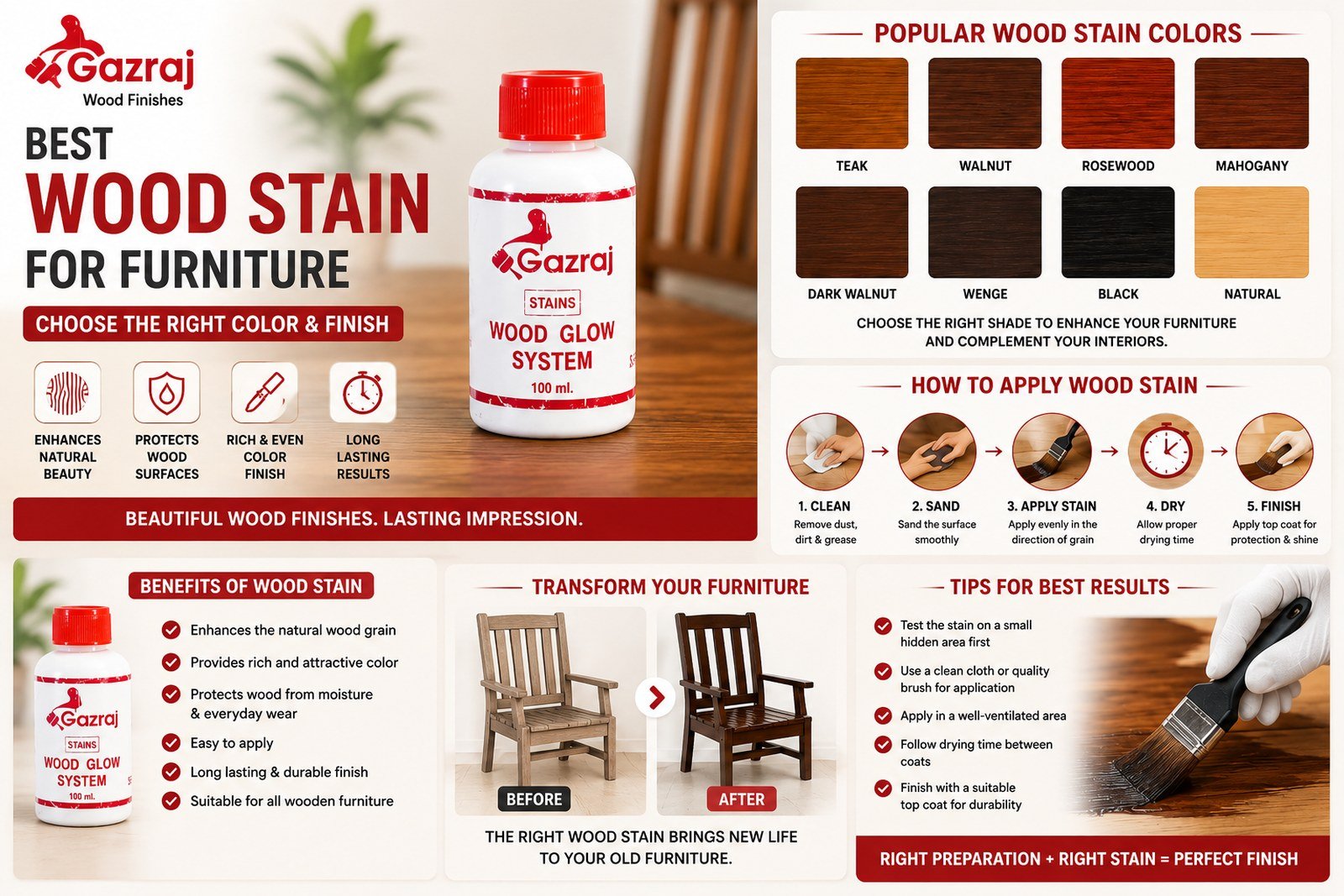
Wooden furniture brings warmth, character, and natural beauty to homes, offices, hotels, restaurants, and commercial interiors. However, the final appearance of furniture depends heavily on how the wood is finished. Choosing the best wood stain for furniture can enhance the natural grain, change the overall colour tone, and give wooden surfaces a more refined and professional appearance.
From dining tables and wardrobes to cabinets, doors, chairs, shelves, and decorative wooden pieces, the right wood stain for furniture can completely transform the look of a surface without hiding its natural texture.
But choosing a wood stain is not simply about selecting a colour you like. The type of wood, existing surface condition, desired shade, interior style, surface preparation, and finishing system can all affect the final result.
In this guide, we’ll explain how to choose the right wood stain colour and finish for furniture, how different shades affect the appearance of wood, and how to apply wood stain correctly for a smooth and attractive finish.
What Is Wood Stain?
Wood stain is a finishing product designed to add colour to wooden surfaces while allowing the natural grain and texture of the wood to remain visible.
Unlike opaque paint, which generally covers the original appearance of wood, a stain changes its colour while retaining much of its natural character.
Wood stains are commonly used on:
- Wooden furniture
- Tables and chairs
- Wardrobes
- Cabinets
- Wooden doors
- Shelves
- Decorative woodwork
- Plywood and compatible wood surfaces
- Interior wooden panels
Depending on the type of wood and the required finish, stains can create anything from a light natural appearance to rich walnut, teak, rosewood, black, or other decorative tones.
Why Use Wood Stain on Furniture?
A major reason for using wood stain on furniture is its ability to improve appearance without completely covering the natural wood pattern.
Enhances Natural Wood Grain
Wood has unique grain patterns that give furniture its character. A properly selected stain can highlight these patterns and make the surface visually richer.
Provides Different Colour Options
You don’t necessarily need to replace furniture to change its appearance. Using a different wood stain colour can give existing wooden furniture a refreshed look.
Creates a Professional Finish
Correct surface preparation and stain application can help furniture achieve a uniform, refined appearance suitable for residential as well as commercial interiors.
Works with Different Interior Styles
Light, medium, and dark wood stain colours can complement different interior themes, from minimal and contemporary spaces to traditional and luxury interiors.
Helps Restore Old Furniture
Staining can also form part of a furniture refinishing process. Old wooden furniture can be sanded, prepared, stained, and finished to give it a renewed appearance.
Best Wood Stain Colours for Furniture
There is no single colour that is best for every piece of furniture. The right choice depends on the type of wood, surrounding décor, and the appearance you want to achieve.
Here are some popular wood stain colour families to consider.
1. Walnut Wood Stain
Walnut wood stain is an excellent choice for furniture where a rich and elegant appearance is desired.
Its deeper brown tone works particularly well for:
- Dining tables
- Wardrobes
- Cabinets
- Office furniture
- Wooden doors
- Premium furniture
Walnut shades can create a sophisticated appearance and work well with neutral, cream, beige, and lighter interior colour schemes.
2. Teak Wood Stain
Teak wood stain provides a warm wooden appearance and is widely suited to furniture and interior woodwork.
It can be considered for:
- Tables
- Chairs
- Doors
- Cabinets
- Wooden panels
- General furniture
Teak-inspired tones are particularly useful when you want furniture to retain a warm and natural-looking character.
3. Rosewood Stain
Rosewood shades generally create a deeper and more decorative appearance.
They can work particularly well for:
- Decorative furniture
- Premium cabinets
- Doors
- Traditional furniture
- Interior wooden elements
The richer tone can help create a luxurious appearance when matched with the right furniture design and interior.
4. Black Wood Stain
Black or very dark wood stains are useful for creating a bold, contemporary appearance.
They can suit:
- Modern furniture
- Office tables
- Shelves
- Cabinets
- Decorative panels
- Contemporary interiors
Dark stains can create strong contrast, especially when used in interiors with light walls and flooring.
5. Light and Natural Wood Stain Colours
Light stain shades are useful when the goal is to preserve a fresh and natural appearance.
They are particularly suitable for:
- Minimal interiors
- Light-coloured furniture
- Small rooms
- Contemporary furniture
- Scandinavian-inspired interiors
Because lighter shades don’t visually dominate a space as much as very dark finishes, they can help create an open and clean appearance.
Best Wood Stain for Indoor Furniture
When choosing the best wood stain for indoor furniture, consider the type of wood, desired colour, interior design, surface condition, and required finish. Walnut, teak, rosewood, black, and natural wood stain shades can be suitable for different furniture styles. For indoor furniture, always test the selected stain on a small sample to check the final colour and appearance before full application.
How to Choose the Best Wood Stain for Furniture
Before purchasing or applying a wood stain, consider the following factors.
1. Identify the Type of Wood
Different woods absorb stain differently.
The same stain can appear lighter, darker, warmer, or less uniform depending on the wood species, grain pattern, porosity, sanding, and previous treatments.
For this reason, always test the selected stain on a small hidden area or sample piece before applying it to the complete furniture surface.
2. Decide the Final Appearance
Ask yourself what you want the finished furniture to look like.
For example:
Natural appearance: Choose a lighter or natural-looking stain.
Warm appearance: Consider teak or medium brown tones.
Rich premium appearance: Walnut and rosewood-inspired shades may be suitable.
Modern appearance: Dark brown or black shades can create a stronger contemporary look.
The stain colour should complement the furniture design rather than simply following a trend.
3. Consider Your Interior Colour Scheme
Furniture does not exist in isolation.
Consider the colours of:
- Walls
- Flooring
- Curtains
- Doors
- Other furniture
- Lighting
- Decorative elements
A dark stain can create attractive contrast in a light interior, while warm wood tones can complement cream, beige, off-white, and earthy colours.
4. Check Surface Preparation Requirements
Even a high-quality stain may produce poor results if the wood surface is not properly prepared.
Dust, old coatings, grease, uneven sanding, scratches, and moisture can affect stain absorption and appearance.
Surface preparation is therefore one of the most important parts of wood staining.
5. Test the Wood Stain First
Never judge the final shade only from a colour chart or digital image.
The actual result can vary because of:
- Wood species
- Existing wood colour
- Number of coats
- Application technique
- Surface preparation
- Lighting conditions
Apply a small test patch and allow it to dry before making the final decision.
Affordable Wood Stain for Indoor Furniture in India
For buyers looking for an affordable wood stain for indoor furniture in India, compare the required shade, coverage, application method, surface compatibility, and overall finishing requirements rather than choosing only on price.
Light vs Dark Wood Stain: Which Is Better?
Both can look excellent when used in the right situation.
Light Wood Stain
Light shades can:
- Preserve a natural wood appearance
- Work well in modern interiors
- Complement smaller spaces
- Create a subtle finish
- Keep the grain visually prominent
Dark Wood Stain
Dark shades can:
- Create a richer appearance
- Add visual depth
- Complement premium furniture
- Produce stronger contrast
- Suit traditional as well as modern furniture designs
Rather than asking which is universally better, choose the shade that works best with the wood and overall interior design.
Best Wood Stain Color to Go With Black Furniture
When choosing a wood stain to complement black furniture or black interior elements, walnut, teak, medium brown, and natural wood tones can create attractive contrast. The right choice depends on the surrounding walls, flooring, lighting, and overall furniture design. Testing a stain sample under the actual room lighting is recommended before making the final selection.
How to Apply Wood Stain to Furniture
Correct application is just as important as choosing the right stain.
Step 1: Clean the Wooden Surface
Remove dust, grease, dirt, wax, and other contaminants.
A clean surface helps achieve a more consistent result.
Step 2: Sand the Wood
Sand the surface evenly using suitable sandpaper.
The goal is to remove imperfections and create a smooth, uniform surface for staining.
After sanding, remove all sanding dust.
Step 3: Test the Stain
Apply a small quantity to an inconspicuous area.
Allow it to dry and check whether the colour matches your expectations.
Step 4: Apply the Wood Stain
Apply the stain evenly according to the manufacturer’s instructions using a suitable cloth, brush, pad, or recommended application method.
Work in manageable sections and follow the direction of the wood grain where appropriate.
Step 5: Maintain an Even Application
Uneven application can create patches or colour variations.
Avoid allowing excessive stain to accumulate in one area.
Step 6: Allow Proper Drying
Give the stain sufficient time to dry according to the product instructions and environmental conditions.
Avoid rushing to the next finishing stage.
Step 7: Apply the Appropriate Finishing System
Wood stain primarily provides colour. Depending on the application and finishing system, an appropriate compatible clear finish or topcoat may be required for the desired final appearance and surface performance.
Always check product compatibility before combining different coating systems.
Common Wood Staining Mistakes to Avoid
Even experienced DIY users can make staining mistakes.
Skipping Sanding
Applying stain directly to a poorly prepared surface can lead to an uneven appearance.
Not Testing the Colour
A colour that looks perfect on a chart may look different on the actual furniture.
Always perform a test application.
Applying Too Much Stain
Excessive stain does not necessarily create a better or darker finish. It may instead cause unevenness or drying problems depending on the product.
Follow the manufacturer’s recommended application method.
Ignoring the Existing Finish
Furniture that already has paint, polish, varnish, or another coating may require additional preparation before staining.
Rushing the Drying Process
Applying subsequent products before the stain has properly dried can affect the final finish.
Follow the specified drying and recoating times.
Wood Stain vs Paint for Furniture
Wood stain and paint serve different aesthetic purposes.
Wood stain is generally selected when you want to add colour while retaining the visible character of the wood.
Paint is usually chosen when you want a more opaque colour that covers much of the original grain appearance.
For furniture where natural grain is an important design feature, staining can be an attractive finishing option.
Why Consider Gazraj Wood Stains?
Gazraj provides wood finishing solutions for furniture manufacturers, carpenters, contractors, interior professionals, and other wood-finishing applications.
The Gazraj wood stain range includes multiple shades designed to create different decorative appearances on compatible wooden surfaces.
Depending on your furniture design and required finish, shades such as Walnut, Teak, Black, Rosewood, Wenge, and other wood stain options can be considered.
Choosing the correct shade, preparing the wood properly, and following the recommended application process are essential for achieving the desired result.
Tips for Getting a Better Wood Stain Finish
For better results:
- Always prepare and sand the surface properly.
- Remove all sanding dust before staining.
- Test the colour on a sample first.
- Follow the wood grain during application where appropriate.
- Avoid excessively heavy application.
- Maintain consistent application across the surface.
- Follow recommended drying times.
- Use compatible finishing products.
- Check the finished shade under actual room lighting.
Small differences in preparation and application can significantly affect the final appearance.
Frequently Asked Questions
Which wood stain is best for furniture?
The best wood stain depends on the type of wood, desired colour, existing surface, interior style, and finishing system. Testing the stain on a small sample before full application is recommended.
What are popular wood stain colours for furniture?
Walnut, teak, rosewood, black, and natural wood tones are commonly used for different furniture styles. The right colour depends on the appearance you want to create.
Is walnut stain good for furniture?
Walnut-inspired stains can provide a rich, deeper brown appearance and are often suitable for tables, wardrobes, cabinets, doors, and premium furniture designs.
Can I stain old wooden furniture?
Yes, many wooden furniture pieces can be refinished with stain, but existing paint, polish, varnish, dirt, or damaged coatings may need to be removed or properly prepared first.
Do I need to sand furniture before staining?
In most refinishing situations, proper sanding and surface preparation are important for achieving a more even stain appearance. Follow the stain manufacturer’s instructions for the specific surface.
Does wood stain protect furniture?
Wood stain is primarily used to colour and enhance the appearance of wood. Depending on the system and intended use, a compatible protective clear finish or topcoat may be required.
Conclusion
Choosing the best wood stain for furniture is about more than selecting a beautiful colour. The wood species, grain, surface preparation, interior design, stain shade, application method, and final finishing system all influence the finished appearance.
Walnut and rosewood-inspired shades can create a rich and premium look, teak tones provide warmth, dark stains can suit contemporary furniture, and lighter shades help preserve a more natural appearance.
Most importantly, test the stain before completing the entire project and follow proper surface preparation and application procedures.
With the right combination of colour, preparation, and finishing technique, wood stain can enhance the natural character of furniture and create a professional-looking finish.